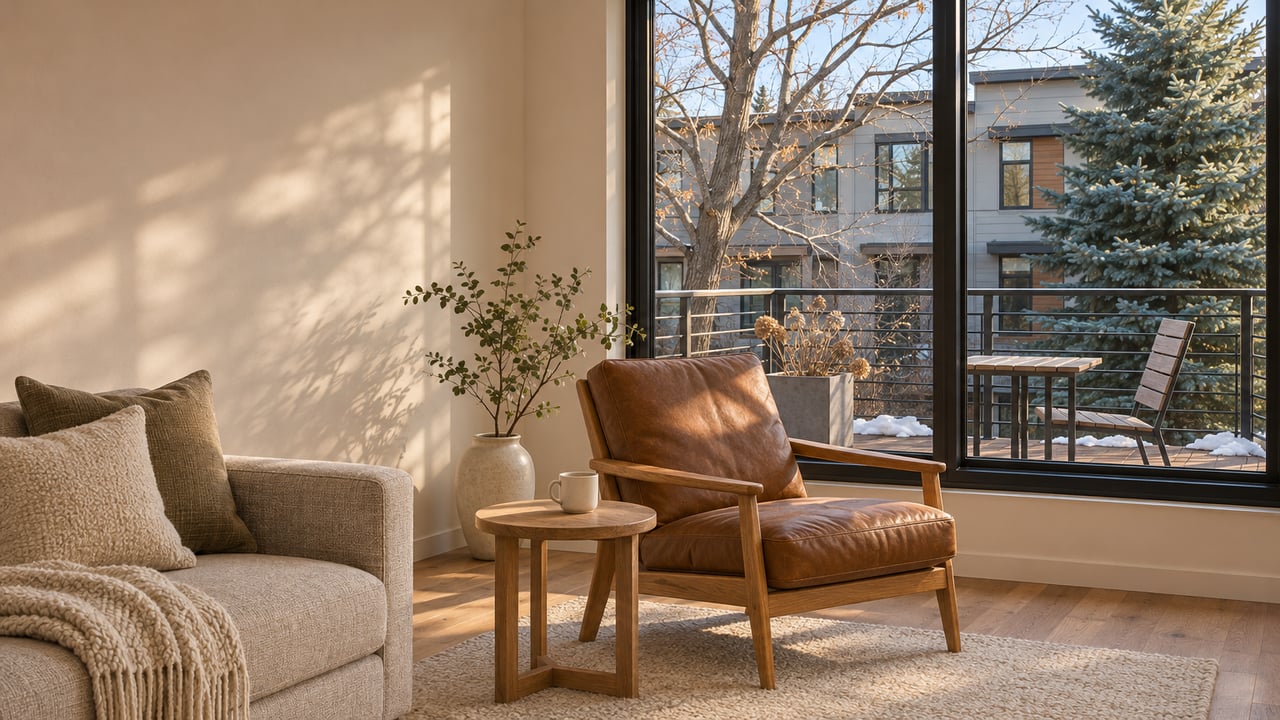
What Boulder's Slower Condo and Townhome Market Gives a Buyer This Winter
November 19, 2026
On Violet Avenue in North Boulder, near Wonderland Lake, a row of newly built townhomes at Koelbel's Violla community is listed between $1,525,000 and $1,895,728, and each is close to 2,000 square feet. Across the City of Boulder, the median townhouse or condo that sold in September 2026 went for $560,000. Both numbers fall under the same "attached" label in a market report. The gap between them explains why the headline figure on Boulder condos says less than it seems to.
The headline figure is down. In September 2026, the city's townhouse/condo median fell 8.2% from September 2025, while the detached single-family median rose 1.0% to $1,262,500, according to the Local Market Update for Boulder published through the Longmont Association of Realtors. That gap usually gets read as condos getting cheaper. A closer look at the same report shows that buyers stepped back more than prices did. For anyone weighing a condo or townhome in Boulder this winter, that changes where to push in a negotiation.
The price change is the least informative line in the attached table. The sales count tells more. From January through September 2026, Boulder recorded 285 townhouse and condo sales, 28.4% fewer than in the same months of 2025. Detached sales over the same stretch rose 3.9% to 669.
Sellers pulled back too, but by less. Attached new listings were down 22.1% for those nine months, and the number of attached homes for sale in September was 219, down 13.8% from a year earlier. Fewer homes for sale would normally tighten a market. Months of supply rose anyway, from 5.8 to 6.5, because sales fell faster than listings did. Detached supply moved the other way in September 2026, falling from 5.4 months to 4.3.
Thin volume also makes the median unreliable. Only 25 attached homes closed in Boulder in September 2026, compared with 39 in September 2025, and the report itself warns that one month's activity "can sometimes look extreme due to small sample size." The nine-month median is steadier: $520,000, down 4.7% from the first nine months of 2025. The Colorado Association of Realtors described October 2026 the same way. Its October market report quoted Boulder/Broomfield-area Realtor Kelly Moye putting Boulder condo and townhome prices down about 3%, with attached homes taking "nearly twice as long to sell as single-family homes."
The detail that ties this together is the sale-to-list ratio. In September 2026, Boulder condos and townhomes that sold closed at 98.6% of list price, while detached homes closed at 96.5%. Attached homes that sold did not need deep cuts from their final asking price. They needed longer to find a buyer: 105 days on market in September, up from 79 a year earlier. In September, the attached segment had fewer buyers and longer waits, with final prices still close to asking.
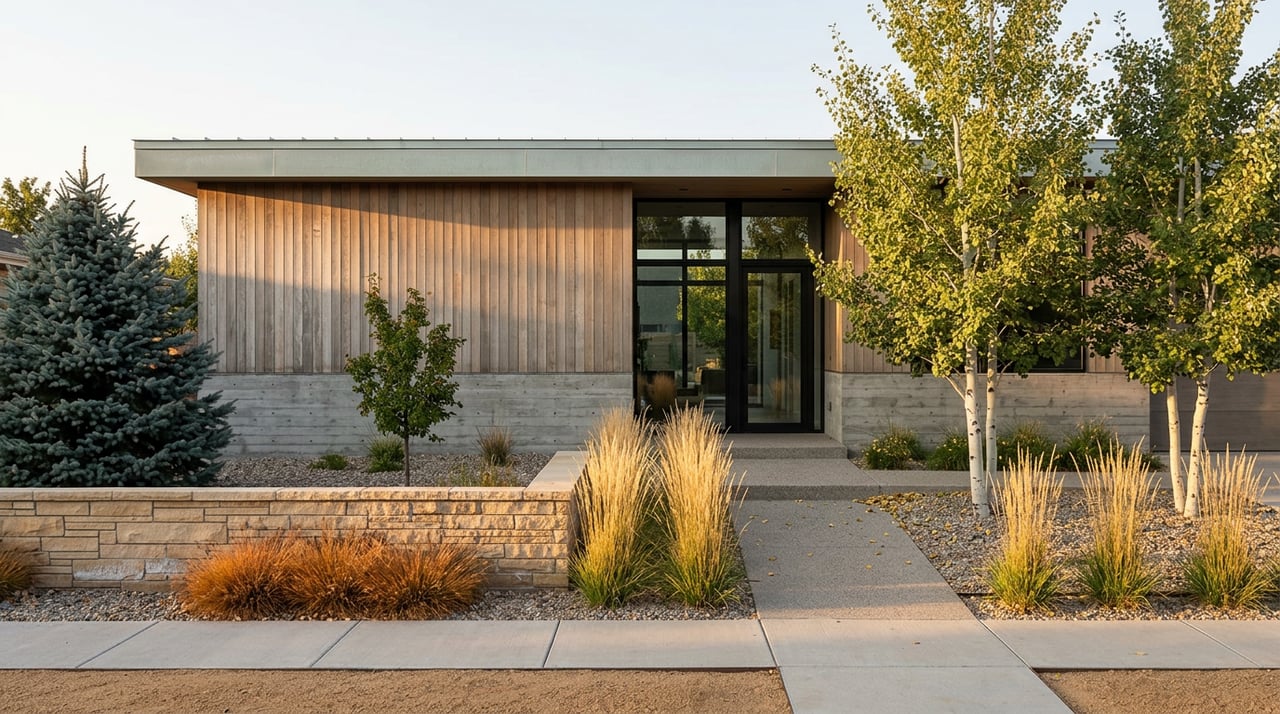
Part of what the median hides is that "townhouse/condo" covers homes with little in common. Violla in North Boulder has 37 homes, 17 townhomes and 20 detached houses. Its townhome plans run roughly 1,960 to 2,250 finished square feet, with three bedrooms, a third-level loft and deck, and a single-car garage, and the Flatiron end-unit plan includes a private elevator. At $1.5 million and up, those townhomes are listed above the city's September detached median.
Near downtown, Picea Residences is a 52-home townhome project at 2500 Spruce St., with plans from 1,600 to 3,500 square feet and a portion of the homes deed-restricted as affordable, according to CCD Magazine. Further out, a proposed 500-home Pearl Arts District at 3550 Frontier Ave. would include studios up through townhomes, but Boulder Reporting Lab reported that construction could start only in late 2028.
A buyer looking at a two-bedroom condo from the 1980s and a buyer touring a new townhome with an elevator are in different markets. The citywide figure blends them into one number. That is why the useful comparison for any single Boulder condo is a set of recent sales in the same building or a building of the same age, not the city median.
If attached prices are mostly holding, the slowdown has to come from somewhere. Moye's explanation in the CAR report is that first-time buyers, traditionally a large share of this market, "remain especially sensitive to monthly payments." Denver County-area Realtor Cooper Thayer, writing about the metro area in the same report, said buyers are "increasingly evaluating not just what a property costs to purchase, but what it costs to own," and noted that HOA dues and insurance premiums do "little or nothing to build household wealth."
Boulder has a local example of how fast that monthly cost can move. In August 2026, Rocky Mountain PBS reported on rising HOA fees in the city's Permanently Affordable Homes Program and cited one North Boulder townhouse whose monthly HOA fee had roughly doubled since 2021. The station linked HOA increases across Colorado to wildfire and hail pushing up insurance premiums, along with rising labor costs for landscaping and construction. Mayor Aaron Brockett told the outlet, "I personally live in a townhouse that's in an HOA that has rising fees." One home in an income-qualified program does not represent every Boulder association. It does show that a dues figure on a listing describes one moment, and the trend behind it matters as much as the current amount.
HOAs are common here. Axios Boulder reported that 57.5% of Boulder-area listings in 2024 had HOA fees, compared with 40.5% nationally. For an attached buyer, then, comparing two Boulder condos often means comparing two associations' budgets as much as two floor plans.
Financing also depends on the association. The Colorado Sun reported that as of February 2025, 210 Colorado condo projects were ineligible for Fannie Mae loans, the third-highest count of any state. In its August 2026 report, the Colorado Association of Realtors noted that Boulder and Broomfield condo and townhome prices were down about 4% for the year and said new Fannie Mae and Freddie Mac lending requirements "could further limit qualified buyers." A smaller pool of buyers who can get a loan is another reason the attached segment moves slowly while its final prices hold close to asking.
A slow segment with steady prices gives buyers room on terms rather than on the price written into the contract. Moye's October commentary put it directly: about 52% of transactions in Boulder and Broomfield counties included seller concessions averaging 5% of the purchase price, often used to buy down the buyer's mortgage rate. She also noted that days on market are counted from the most recent list price, so a home that sat through several price reductions can look newer to the market than it is.
Put those together with the September numbers and a Boulder condo buyer this winter is working in a segment with 6.5 months of supply, more than three months of typical market time, and sellers who are used to contributing toward closing. The figures in this post are general market information, not legal, tax or financial advice. Confirm your own loan, dues and closing costs with your lender and the right professional before you decide.
For a specific unit, the questions that tie back to this market are:
Are Boulder condos a better deal than houses right now? On price alone, the gap is smaller than the headline suggests. In September 2026, attached homes sold at 98.6% of list price versus 96.5% for detached. The difference is in time and terms. Attached homes are taking longer to sell, and concessions are common across Boulder and Broomfield counties.
Does a new Boulder townhome compete with older condos? Mostly not on price. Move-in-ready townhomes at Violla are listed from $1,525,000 to $1,895,728, which is several times the city's September attached median of $560,000.
Is the 8.2% drop a sign that Boulder condo values are falling? It covers 25 sales in one month. The nine-month median, down 4.7%, and CAR's October estimate of about 3% for Boulder give a steadier read.
If you are comparing a Boulder condo or townhome with a house this winter, Lindsey Harshman can go over the questions above with you for a specific building and talk through an offer that weighs terms along with price. If you own a condo here and want to know where it stands before you list, start with a home valuation, or let's connect.
Stay up to date on the latest real estate trends.
Get assistance in determining current property value, crafting a competitive offer, writing and negotiating a contract, and much more. Contact Lindsey today to discuss all your real estate needs!