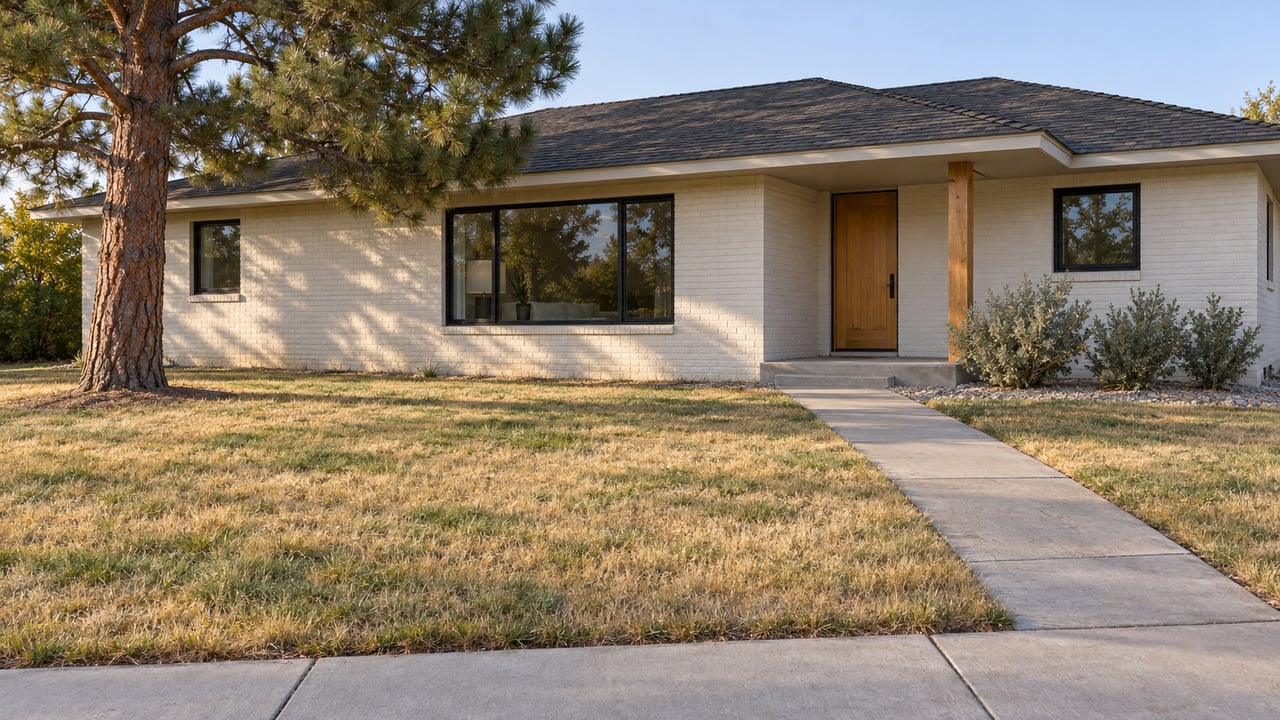
Lafayette's Zoning Map Changes February 1. What Does Your Lot Become?
October 15, 2026
October 15, 2026
On February 1, 2027, every parcel in Lafayette moves from the 1986 Development and Zoning Code to a new Land Use Code. City Council adopted it unanimously on September 15, 2026, and the city calls it the first comprehensive rewrite in nearly 40 years. The council pushed the effective date back from December 15 to February 1 so it would have more time for amendments.
Here's what that means for anyone comparing homes this winter. Two Lafayette houses with similar prices, square footage and finishes can come with very different rights. One may allow a duplex or a fourplex. The other may be limited to a single home plus one accessory unit. The zone district decides which. As of mid-October 2026, the post-adoption Lafayette Listens project page offers the adopted zoning map as a PDF but no side-by-side comparison of old and new districts.
The first friction shows up in timing. If you go under contract in November or December, you close while the 1986 code still governs and then own the property under the new one a few weeks later. If you're planning a project, the order of events matters.
The adopted code's transition section, §26-1-6, spells out how this works:
So a seller's half-finished plans, or a project a buyer has in mind, can end up reviewed under either code depending on paperwork status and a staff determination. That's worth pinning down before you assume something can be built.
The new code swaps the old district names for a new set. The residential districts include Neighborhood Rural, Neighborhood 2, Neighborhood 3, Old Town Neighborhood and three Form Neighborhood districts. Here are the basic standards in four of them:
| District | Duplexes | Detached-house lot size | Principal height limit | Notable condition |
|---|---|---|---|---|
| Neighborhood Rural, NR | Not allowed | 10,000 sq ft minimum | 27 ft | 25 ft front, 30 ft rear setback |
| Neighborhood 2, N2 | 2,000 sq ft per unit | 5,000 sq ft minimum | 27 ft | Triplex and fourplex at 1,500 sq ft per unit, with street limits |
| Neighborhood 3, N3 | 2,000 to 4,000 sq ft per unit | 2,000 to 9,000 sq ft | Per §26-2-4(c) | Courtyard and multi-household housing also allowed |
| Old Town Neighborhood, OTN | 3,500 sq ft per unit | 7,000 to 10,000 sq ft | 24 ft | 13 units per acre maximum |
N2 deserves the closest look. On paper it allows triplexes and fourplexes. Under §26-3-3(a)(3), though, they're limited to sites on collector streets that have on-street parking and sidewalks. The exception is a lot that already had a triplex or fourplex before the new code. Two N2 lots a few blocks apart can carry different rights depending on the street in front of them. For a buyer weighing a property's long-term options, the street's classification matters as much as the district name.
Old Town Neighborhood comes with design rules on top of the numbers. Every side of a building gets similar treatment. The front façade needs at least 25% window and door openings and the other façades at least 10%, and a bulk-plane limit applies. In the Form Neighborhood districts, duplexes can sit on one lot or be split onto individual lots.
ADUs are the most citywide part of the code. An accessory dwelling unit is allowed with a detached single-household home or a duplex, with one ADU per principal dwelling. Duplex lots can only have attached ADUs. Detached ADUs are capped at 750 square feet, or 900 square feet if they meet the code's definition of an accessible unit. Attached ADUs are capped at 50% of the main home's floor area or 1,000 square feet, whichever is smaller. An ADU that takes up an attic, a second floor or a basement can use that entire area. Detached units generally have to sit at least six feet from the main house. Within 10 feet of a side or rear lot line, their entrances have to face away from that line, with an exception for alleys.
That basement allowance means a lot in practice. A house with a finished walkout basement may already hold most of what an attached ADU needs.
State law sets the floor here. The Colorado Division of Local Government lists Lafayette as a subject jurisdiction under HB24-1152. That law requires communities to allow one ADU wherever single-unit detached homes are allowed, and it bars owner-occupancy requirements for the ADU or the main home, with limited exceptions. The new code's parking table calls for one off-street space per detached home or duplex unit. According to the Division of Local Government, HB24-1152 bars local rules from requiring a new parking space for each ADU, with narrow exceptions.
Short-term rentals work differently. A license is still required, the rental still has to be incidental to a primary residence, and it generally can't run in a dwelling that isn't the operator's primary residence. On a lot with a main house and an ADU, either one can be the rental. An operator can't rent out the main house while claiming the ADU as their primary residence. The ADU rules and the short-term rental rules apply separately. An ADU allowed by right still has to meet the rental license and primary-residence standards before it can be rented by the night.
The adopted code isn't finished. Council flagged three items for more discussion before February 1, according to a Daily Camera report: the definition of building height, greenhouse and nursery standards in Old Town, and standards for OTX3. OTX3 is the Old Town Transition district along the southern stretch of Public Road from Emma Street to West Spalding Street. The Daily Camera reported that a resident petition against the OTX3 standards had passed 1,000 signatures. It argues the district could bring large market-rate mixed-use buildings and put small businesses at risk. In an August Daily Camera article, city planning staff responded that the proposal would not raise existing building-size or height limits, and that only five OTX3 parcels could potentially fit the scale the petition cited.
The schedule for settling these items is tight. Councilmember David Fridland told the council that a second ordinance has to go through the working group, the planning commission and two council readings, and that "it seems really tight in January to get to that Feb. 1." The October city calendar shows a City Council meeting on October 20, a council workshop on October 27 and a Planning Commission meeting on October 28. None of them is labeled as a cleanup-amendment hearing.
The other open question is property that stops conforming. Colorado Hometown Weekly reported that at least one industrially zoned property near Baseline Road moves to a residential-or-commercial district under the new map, which raised questions at council about how nonconforming properties will be handled. In the same report, Planning Manager Phil Kleisler described the letters the city planned to send affected owners:
"The city has adopted this zoning, and your property is going from A to B, and this is what it means. We'd welcome a conversation about your interest and future interest in the property, and here's how to contact us."
As of October 12, the city's adoption update doesn't say whether those letters have gone out. The project page has no FAQ on how existing nonconforming homes will be treated. A seller who gets one of those letters will have useful information to share with buyers. A buyer touring a listing can't assume the seller has received one.
Normally there's little time for zoning homework mid-deal. Right now there's more. The Colorado Association of Realtors' release for August 2026 showed Boulder County listings down about 10% and prices flat, with well-priced homes selling in about 62 days at 98.5% of asking. For the Boulder and Broomfield area, the same assessment put condo and townhome values down about 5% year to date and flagged HOA costs as an added affordability hurdle. That monthly series leaves out new construction, so it doesn't capture new-build supply.
At about two months on market, a buyer has time to confirm a property's new district during due diligence. A seller whose lot gains duplex or ADU flexibility under the new code has a fact worth putting in the listing. In a flat-price market, that kind of differentiation counts for more.
Lafayette planning staff are the listed contact on the project page for parcel-specific questions.
Does the new code apply to my home right now? Generally not yet. The new code takes effect February 1, 2027, and the 1986 code governs until then. The transition section adds one wrinkle. A complete single-step application submitted before February 1 may still be decided under the new code if the Planning Director determines that's the better way to carry out the Comprehensive Plan.
Can the city require me to live on site if I add an ADU? State law under HB24-1152 bars owner-occupancy requirements for an ADU or the main home in subject jurisdictions like Lafayette, with limited exceptions. Short-term rental rules still tie any nightly rental to the operator's primary residence.
Could the rules change again before February? Yes. Council plans a follow-up ordinance, and building height, Old Town greenhouse and nursery standards, and OTX3 are all still under discussion.
If you're weighing a Lafayette home this winter, or thinking about selling one whose lot gains new options on February 1, Lindsey Harshman can help you find out what the new district allows and build that into your pricing, offer terms and timeline. Let's Connect.
This article is general information, not legal, tax or financial advice. Consult a qualified professional about your situation.
Stay up to date on the latest real estate trends.
Get assistance in determining current property value, crafting a competitive offer, writing and negotiating a contract, and much more. Contact Lindsey today to discuss all your real estate needs!